
According to Wikipedia
“Lies, damned lies, and statistics” is a phrase describing the persuasive power of statistics to bolster weak arguments, “one of the best, and best-known” critiques of applied statistics. It is also sometimes colloquially used to doubt statistics used to prove an opponent’s point.
The phrase was popularized in the United States by Mark Twain (among others), who attributed it to the British prime minister Benjamin Disraeli. However, the phrase is not found in any of Disraeli’s works and the earliest known appearances were years after his death. Several other people have been listed as originators of the quote, and it is often attributed to Twain himself.
We are launching the MAIN STREET JOURNAL as a kind of counterpoint to the formidable WALL STREET JOURNAL. A great deal of the way we think about the world of work – and our economy – is influenced by our neighbours to the south.
When I say “we”, I mean Canadian universities, our business press, our policymakers – and individual Canadians.
To give you an example, years ago I explained to a prospective client, who wanted their personal tax return done that “I do mainly corporate work”. She imagined that I meant Microsoft or Shopify. I actually meant 3 software developers who incorporated to take advantage of Canada’s R&D tax credits for smaller Canadian-controlled private corporations (“CCPCs”).
We need statistics to make sense of the world around us.
Who are we as a nation?
How small is a small business?
Where do we work?
Who are our customers?
How likely are we to become the ‘CEO of a major corporation’, or become a ‘recognized leader, exerting global influence’?

What they tell us at Business School – Youtube.com
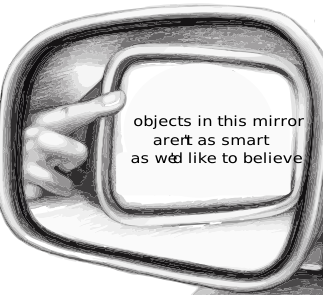
We also need to think critically.
That is supposed to be why we go to university. And Canadians go to university in higher numbers than just about anyone else – according to readily available statistics from the OECD[1]. The sad truth is that critical thinking is not widely practiced. We all tend to see the world through lenses that have been shaped by our beliefs and our own self-interest
[1] Adult ‘Tertiary’ Education by Country
“The Universe is full of dots. Connect the right ones and you can draw anything. The important question is not whether the dots you picked are really there, but why you chose to ignore all the others.
Too often, that’s what we do—we draw pretty pictures and ignore the missing dots, then congratulate ourselves on our artistry. It’s a big problem in my field of economics. Keynesians just know that Obama’s stimulus package created millions of jobs. After all, their data and studies prove it. But somehow, the skeptics on the other side can prove the stimulus did little or nothing. Their data and studies seem just as convincing to them. How can that be?
Both sides want to feel lovely and sure of themselves[1]. So they manage somehow to convince themselves that the data on the other side of the argument are flawed or the studies are done by hacks or pawns of special interests
[1] The author uses Adam Smith’s (1723-1790) somewhat archaic terminology here. “Feeling lovely” is roughly akin to “feeling good about yourself”.
Early in my career, I actually thought that the studies that supported my view of the world were the good studies. They were done carefully and thoroughly to establish truth. Those on the other side? They were easy to dismiss. Full of flaws. Bad assumptions. Incomplete analysis. As I have gotten older, I have become less confident and maybe more honest. The economy is too complex; we can’t measure the interactions of all its various pieces with any precision. We don’t have enough data, and we don’t understand how things fit together. We are drunks looking for our lost keys under a lamppost not because that’s where we lost our keys but because that’s where the light is. We should be humbler and more honest. Our empirical studies are very imperfect. We often hold the views we do because of ideology and principle. Then we find some evidence that supports those views. We ignore the rest.”[1]
[1] Roberts, Russell D. How Adam Smith Can Change Your Life (pp. 68-69). Penguin Publishing Group. Kindle Edition.
In the series of posts and articles that follow, as editor I will do my best to think critically and – where possible – to build a statistical framework that puts a solid contextual basis around the data used.
Rob Farrow, SBA[1] (Editor)
[1] Small Business Analyst
[1] The author uses Adam Smith’s (1723-1790) somewhat archaic terminology here. “Feeling lovely” is roughly akin to “feeling good about yourself”.
[1] Roberts, Russell D. How Adam Smith Can Change Your Life (pp. 68-69). Penguin Publishing Group. Kindle Edition.
[1] Small Business Analyst