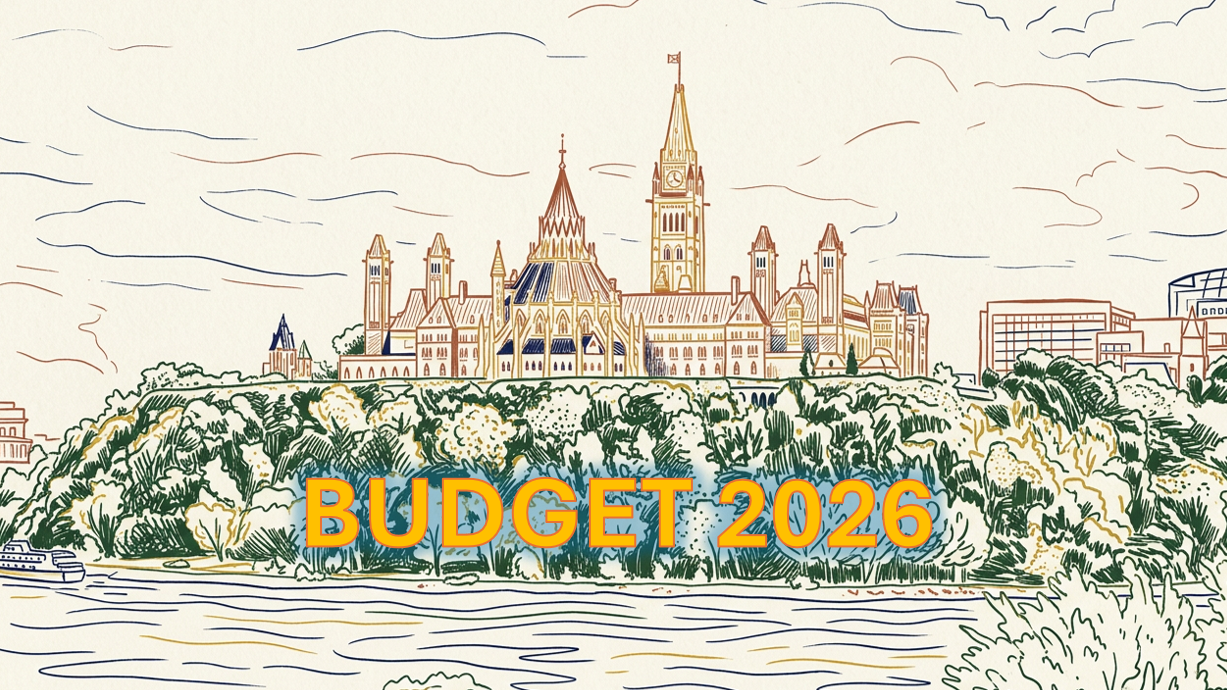
The 2026 Canadian Federal Budget intentionally encourages small business by targeting new capital-formation and scaling incentives to high-growth, productive enterprises, while offering compliance relief and retaining standard baseline rates for traditional, owner-managed small businesses.
High-Growth, Scalable Small Businesses
The budget introduces targeted measures to encourage risk capital, intellectual property creation, and productive capacity:
- Canada Growth Incentive (CGI): Introduces a lifetime capital gains exemption of up to $15 million on the disposition of qualifying shares of eligible Canadian-controlled private corporations (CCPCs).
- Eligibility Restriction: Specifically excludes businesses whose primary value relies on individual reputation or personal service, such as professional corporations (doctors, lawyers, accountants), consulting, real estate, and hospitality.
- Expanded Small Business Investment Rollover: Broadens rules for deferring capital gains when proceeds from selling eligible shares are reinvested into another operating Canadian business, easing reinvestment for venture-backed and serial entrepreneurs.
- SR&ED Commercialization Expansion: Extends the 35% refundable Scientific Research & Experimental Development (SR&ED) credit beyond core bench research to include regulatory testing, certification, and intellectual property (IP) protection costs.
- Productivity Mega Deduction: Accelerates immediate write-offs for capital assets, machinery, and qualifying property to reduce the marginal effective tax rate on capital investments.
Small, Owner-Managed Businesses
For local, professional, and lifestyle businesses that do not scale through large-scale capital or R&D, the budget focuses primarily on operational simplification and administrative thresholds:
- Small Business Deduction (SBD) Unchanged: Maintains the baseline 9% federal small business corporate rate on active business income up to $500,000 without expanding the business limit.
- Instalment Payment Relief: Raises the threshold requiring corporate tax instalments from $3,000 to $7,500 (starting in 2028), reducing cash-flow drag and filing frequency for roughly 185,000 small CCPCs.
- Foreign Property Reporting (Form T1135): Doubles the reporting threshold from $100,000 to $200,000 (and simplified reporting to $500,000), reducing routine paperwork for incorporated professionals holding modest foreign assets.
- Individual Pension Plan (IPP) Rules: Tightens rules surrounding excess surpluses in owner-manager pension structures to curtail aggressive passive wealth accumulation.
Summary of Policy Direction
| Dimension | High-Growth Small Businesses | Owner-Managed / Lifestyle Businesses |
| Primary Incentive | $15M Canada Growth Incentive capital gains exemption | Standard Lifetime Capital Gains Exemption (LCGE) |
| Capital & R&D Support | Accelerated expensing & expanded SR&ED for IP/testing | General CCA deductions |
| Target Sector | Tech, advanced manufacturing, IP-intensive firms | Professional corporations, retail, personal services |
| Primary Relief Type | Scaling & capital reinvestment incentives | Compliance simplification & higher instalment thresholds |