In some ways, the leverage model in a professional service firm resembles a standard markup function in an automotive repair business.
There is an important difference, however.
Professional service firms like our big four audit firms use a markup of at least 7 times the wage cost and often 10 times or more.
This compares with standard markups of about 2 or 2.5 times that’s common in most automotive repair shops.
So, how do they manage to get those kinds of markups?
First, they need clients that can afford to pay those kinds of fees. When it comes to management consulting, it’s usually best to find a client that’s spending someone else’s money. In Canada that often means our federal or provincial governments, or professional managers spending investors’ money.
There was a time when our largest accounting firms lobbied on behalf of their largest and most important clients. Now, somehow, they’ve managed to convince governments to pay for their advice. The swagger and self-confidence needed to pull that off is quite remarkable.
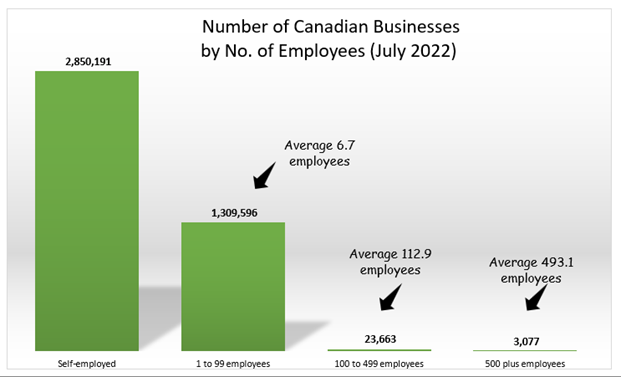
Another approach is to exploit a monopoly for a required product or service. The audited financials of public companies work well in that way for our big audit firms. According to Microsoft’s CoPilot service there were 3,804 public companies in the US out of about 31.7 million businesses. But in Canada we have about 5 times as many per capita – and our businesses are smaller.
It seems unlikely that in an era where private equity is increasing in importance, that a public listing is more important for a growing company here. What’s more likely in our view, is that the professional service firms are the main beneficiaries who exploit complex regulations to provide expensive regulatory compliance services.
Canadian companies face unexpected tax burdens after going public on stock exchanges
Would You Invest in Char Technologies?
For a tax practitioner working in a small firm, it’s simply unimaginable that there’s an opportunity to mark up the hourly rates of junior staff by a fact of 4 or 5 times, let alone 7 to 10 times.
In fact, the salary expectations of college graduates, combined with a lack of practical skills, makes cost recovery difficult if not impossible when employing them to work with small business clients.