Marketing vs. Reality Gap
by Rob Farrow, SBA (www.the-hatchery.org)
While software vendors market management insights heavily to sell subscriptions, industry usage data shows a distinct gap between marketing and adoption:
- What software sells: An all-in-one financial dashboard that turns micro-owners into confident financial managers.
- How micro-owners actually use it: Most untrained owners primarily use the software for transactional utility—sending invoices, accepting payments, and handing off the underlying bookkeeping data to a CPA at tax time.
The software packages constantly highlight managerial accounting value because it serves as a powerful sales pitch, even if the owner’s primary day-to-day value remains operational automation and tax compliance.
So, how useful are accurate financial statements to someone who is inexperienced and untrained in interpreting financial statements (i.e., in becoming a ‘financial manager’)?
Accurate financial statements offer limited direct insight to an untrained individual working in isolation, but they remain essential as a foundation for seeking expert help, spotting broad trends, and preventing costly errors.
Without training, attempting to read a balance sheet or cash flow statement is like reading a medical diagnostic report—you might recognize a few words, but you will miss the underlying diagnosis. However, accuracy still provides critical value in several key ways:
- High-Level Visibility: Even without training, anyone can check a few intuitive line items. You don’t need a finance degree to see if Total Revenues are growing, if Net Profit is positive, or if Cash on Hand is dangerously low.
- Empowering Advisors: The primary value of accurate statements for an inexperienced person is handing them off to someone who does know how to read them. Whether working with a CPA, a bank loan officer, an investor, or a business broker, accurate data ensures you get valid advice. Inaccurate statements lead experts to give bad guidance based on flawed assumptions (“garbage in, garbage out”).
Given that the usefulness of accurate financial statements to the untrained user is primarily to empower financial advisors, it would seem obvious that inaccurately prepared financial statements – and the underlying records – would be of very limited use to financial advisors, since correcting the errors is often more difficult (and expensive) than having a skilled technician rebuild the records from accurate cash-basis records.
…According to CoPilot
Your assessment is largely spot-on: in accounting and advisory, untangling badly prepared financial statements is often significantly more time-consuming, expensive, and frustrating than throwing them out and rebuilding the books from scratch using primary cash-basis source documents.
Badly prepared statements create specific friction points for financial advisors, CPAs, and valuation experts:
- The Forensic Overhead: Fixing bad accrual accounting requires forensic work. An advisor has to track down why bank reconciliations don’t match, trace phantom Accounts Receivable that were never collected, and locate miscategorized assets. Unwinding bad entries line-by-line takes far more billable hours than simply importing raw bank/credit card feeds and categorizing transactions correctly from day one.
- The Cost Penalty: Business owners often pay twice—first paying an unqualified bookkeeper to produce inaccurate statements, and then paying a CPA a much higher hourly rate to untangle or discard those records to file taxes or secure a loan.
- Misdirection and Legal Risk: Inaccurate statements give a false sense of structure. An advisor relying on them without auditing the underlying data might give flawed strategic advice, misprice a business valuation, or approve a loan that defaults.
Do inaccurate statements offer any value at all to an advisor?
Only in a diagnostic sense. To an experienced advisor, badly prepared financial statements serve as a map of operational failure. They immediately reveal where the business owner lacks controls, where processes are breaking down, or where potential fraud or tax exposure might exist. They also help the advisor scope the effort and cost required to fix the mess.
How do commercial software packages highlight the value of accounting information to allow micro-business owners to manage their business’s finances?
The Spin
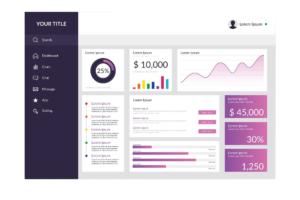
Reframing Financial Statements into Visual Dashboards
Rather than asking a micro-business owner to interpret a traditional Income Statement or Cash Flow Statement, software packages convert underlying accounting entries into real-time visual dashboards. Marketing copy heavily features phrases like:
- “Know where your money is going” (visual expense categorizations).
- “See your business performance at a glance” (revenue vs. expense graphs).
- “Track cash flow in real-time” (bank feed synchronization).