Canada’s largest CPA firms have undergone a paradigm shift in the last decade. One estimate suggests that 80% of our top 10 firms now have a ‘dedicated offshore pod’ in India or the Philippines. What’s more, these same experts suggest that 70% of the staff for a typical Vancouver public company audit work from one or two of these pods.
A decade ago, these firms used offshore business process outsourcing (BPO) firms to facilitate the Big 4 audit firms’ offshore pods. These BPO firms relied on the leverage model to make a profit. However, the Big 4 have always used leverage themselves, and soon replaced independent BPO firms with in-house teams to take advantage of international labour arbitrage themselves.
The savings are pretty spectacular.
According to the Canada Job Bank, the median hourly of a financial auditor with a CPA in Canada is $39.56. That translates to about $82,600 annually[1]. How does that compare with the wages of an experienced accountant in Cebu City or Mumbai?
Mumbai $11,625 ($8,600 USD)
Cebu City $18,150 ($13,430 USD)
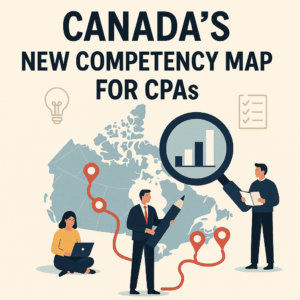
By contrast, the minimum wage in my home province of BC is about $36,500 for someone without experience. Of course, even if you could retain that person after spending a couple of years training them, they would never be able to qualify. In case you missed it, the new CPA Competency Map effectively means they would never qualify.
In a professional services business, human resources are the only thing you have to sell. Our profession has made the business models of practitioners in small firms unworkable.
Here’s how CPA earnings stack up in Ontario today:
• According to CPA Ontario, the average CPA salary in the province is about CAD 185,000, while the median is roughly CAD 130,000.
• Entry-level CPAs (starting out) have a median base salary of about CAD 86,000; after ~25 years’ experience, that median rises to around CAD 180,000.
• At the very top end, CPA partners average CAD 376,000 (median CAD 275,000), business-owner CPAs average CAD 368,000 (median CAD 210,000), and executive-management CPAs typically earn between CAD 200,000–300,000.
• In the Toronto market specifically, CPAs with 3–5 years’ experience can expect roughly CAD 70,000–85,000 per year.
• By contrast, recent Indeed postings for “Certified Public Accountant” roles in Ontario show an average base of about CAD 76,300—reflecting entry-to-mid–career positions and excluding partner/shareholder pay.
If you need a deeper dive by region, firm size or specialty (tax vs. audit vs. advisory), let me know!
[1] That is a lot less than CPA BC ($131,000) or CPA Ontario ($130,000) claim.