Economics: A User’s Guide (Part 2)

Russell David “Russ” Roberts (born 1954) is an American-born Israeli economist. He is currently a research fellow at Stanford University’s Hoover Institution and president of Shalem College in Jerusalem.

He is known for communicating economic ideas in understandable terms as host of the EconTalk podcast.

Roberts describes himself as a classic liberal, stating, he believes in limited government combined with personal responsibility. He says I am somewhat of a libertarian, but that term comes with some baggage and some confusion.”

In the world of economics ‘classic liberal’ translates as ‘neoclassical’. For non-economists, that really means ‘conservative’.

For Part Two of our guide, we wanted to highlight a conservative, neoclassical approach. Like Ha-Joon Chang, Roberts is not only a great communicator, but also particularly self-aware. His entertaining 2014 book: How Adam Smith Can Change Your Life, gives contemporary readers some great insights into the founder of modern economics’ other book – The Theory of Moral Sentiments.

Economics: A User’s Guide (Part 2) –

WATCH FULL VIDEO:

Share:

Facebook
Twitter
LinkedIn

More Posts

Canadian Tech Playbook

Here’s an enhanced, more polished version of your blog post—tightened for clarity, stronger flow, and a more provocative close, while keeping your core arguments intact:

VC-Backed FAAS

As a professional accountant with more than 3 decades of experience – including 5 years with the CRA as an auditor and 5 years with

FAAS Bypass

Is FAAS (Finance As A Service) Just a Way to Bypass Regulatory Oversight? CPA Canada’s new competency map for public accountants in small, one or

CPA Competency Map Issues

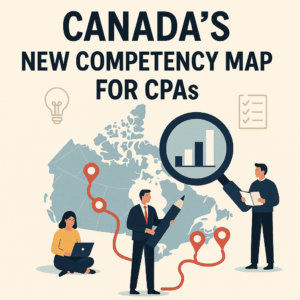
Canada’s new competency map for CPAs: Makes it difficult (or impossible) for small, one or two-partner firms to train their replacements. While the “new” Competency

ABOUT

Launch – June 16th, 2023

The MAIN STREET JOURNAL was launched online in 2023, as a kind of Canadian, small business counterpoint to the venerable WALL STREET JOURNAL (WSJ), established in New York City in 1889.

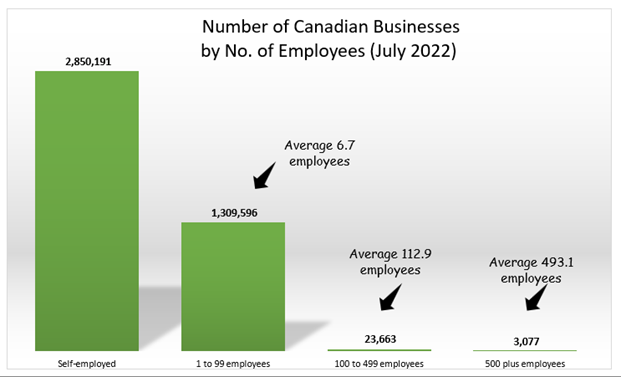
Canada’s small businesses are smaller than most people think.  

This is true for people that work in small businesses, for policymakers, business schools, and the business press. The self-employed and other small business owners don’t ‘get no respect’ and yet about 73% of private sector employment in Canada is made up of the 2.85 million self-employed individuals, and 1.3 million small employer businesses which average less than 7 employees. 

We believe it’s time that these workers, and the small business owner-managers that employ them, got some respect. What’s more, we believe that business schools and policymakers should get out of their ivory towers and take a walk on Main Street! 

73.2 % of private sector employment is provided by small business